
You brush your teeth twice a day, floss, and use whitening toothpaste. So, why do your teeth look yellow in the mirror? This is one of the most commonly expressed worries that patients bring into a dental office, and there’s good reason for the frustration. The reality is that tooth color is much more complicated than many patients realize, and yellow teeth do not automatically indicate a cavity, disease, or poor oral hygiene.
From college students living near the UT campus to young families in Round Rock and professionals commuting downtown, residents of Austin frequently ask themselves why they have yellow teeth. Before you decide whether to brush harder or switch brands again, take some time to understand where tooth color comes from. In this blog, you will learn about the root of the issue and the solutions for yellow teeth.
Common Reasons Your Teeth May Look Yellow Despite Brushing
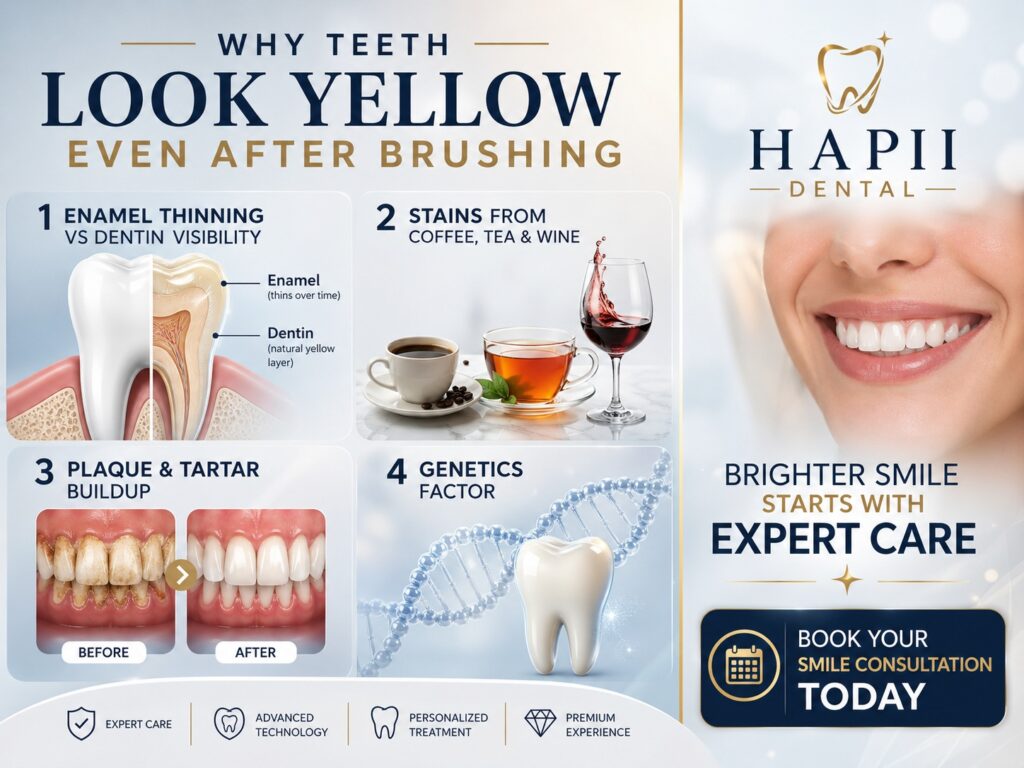
If you brush your teeth daily, why do they still look yellow? In most cases, the causes of tooth discoloration fall into one or more of the following categories:
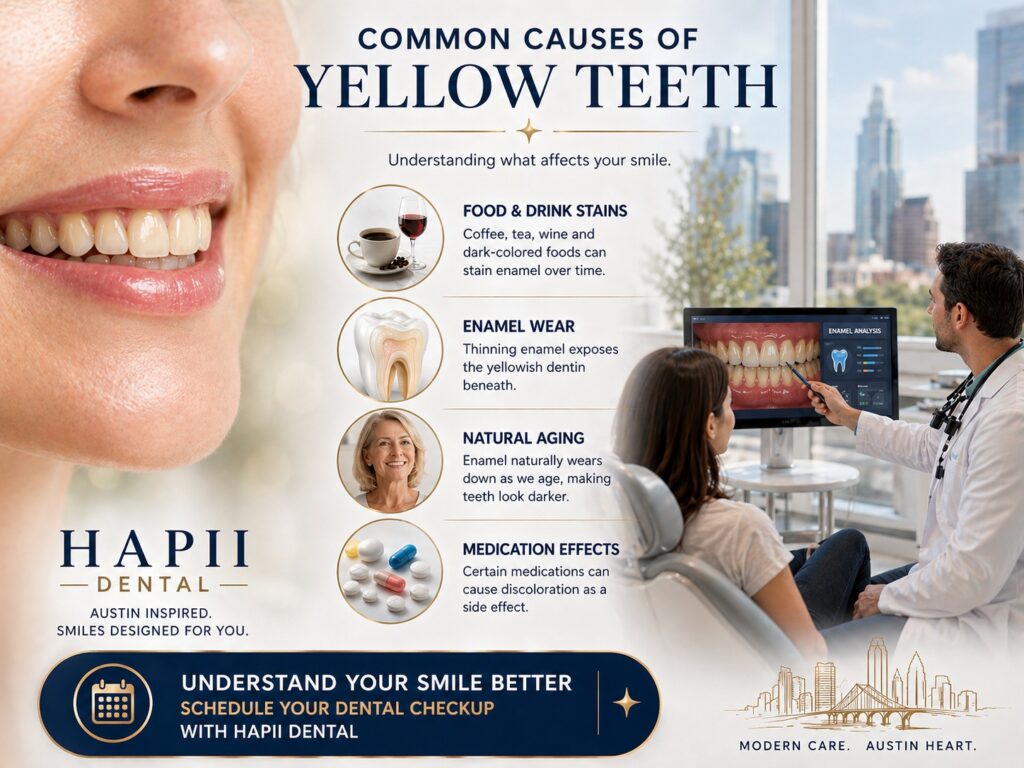
- Intrinsic staining: This staining occurs from within the tooth, as a result of genetics, certain medications taken during development (such as tetracycline), or excessive fluoride exposure during childhood. No amount of brushing can affect this kind of discoloration.
- Extrinsic staining: This staining is from external sources, such as coffee, tea, red wine, chewing tobacco, and berries. The pigment from these items adheres to the tooth surface and can penetrate the enamel slightly. Extrinsic stains can respond to whitening.
- Erosion of enamel: Acids in foods, gastric reflux, and even illness can wear down enamel over time, exposing more of the underlying yellow dentin.
- Plaque and tartar buildup: Even if you have good brushing habits, you may be missing spots, and soft plaque can harden into tartar, which typically appears yellow to brown. Tartar can be removed efficiently by your dentist or hygienist during a routine cleaning.
- Medication use and medical conditions: Many medical treatments, including antihistamines, high blood pressure drugs, and chemotherapy, can discolor your teeth as a side effect.
Understanding the source of your tooth discoloration is the first step toward an effective treatment. Only a cosmetic dentist can assess and determine why your teeth may appear yellow and whether you need professional teeth whitening in Austin.
Your Teeth Have a Natural Color, and It Is Not Always White
Did you know that our teeth are not naturally white? The outer layer of your teeth, the enamel, is semi-translucent, and over top of it, you have a yellowish layer, the dentin. The clearer the enamel is, the more of the yellow underlying dentin shows through. Those who are prone to yellow teeth do not have as much translucent enamel to contrast with the dentin, regardless of their hygiene habits.
If you are worried about yellow teeth despite good oral hygiene, remember, genetics is another major factor. One of the most commonly overlooked causes of tooth discoloration is that it has absolutely nothing to do with oral hygiene. Just like our hair color and skin tone, the natural color of our teeth is inherited as well. If your parents have naturally yellow-toned teeth, then there is a good chance that you do too. This type of tooth discoloration is something that no toothbrush can change, regardless of however used.
Are Naturally Yellow Teeth Healthy?
It’s a common myth to assume that yellow teeth mean something is inherently unhealthy for your teeth. While the two do often coincide, that is not the case. A bright white tooth doesn’t guarantee good health, and often just masks the truth about a tooth with hidden decay or structural problems.
One can possess extremely healthy teeth (free from decay or gum disease) with very strong enamel and still have warm or yellowish tones. However, if your teeth suddenly turn yellow, the discoloration appears on only one tooth, or it comes with pain or sensitivity, then you should consult your dentist.
How to Fix Your Yellow Teeth?
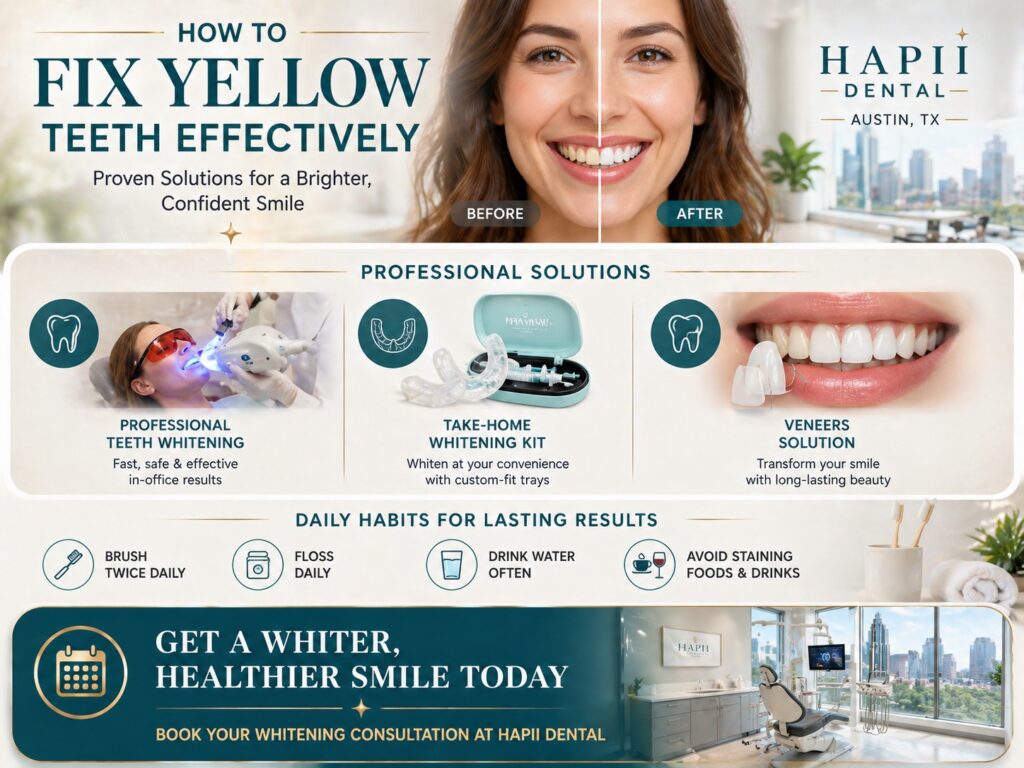
So, if your teeth are yellow and you’d like to address it, there are methods to do so, and some work much better than others.
1. At-home Products
Whitening toothpastes, strips, and washes all use a mild abrasive or contain a very small amount of bleaching agents. While this will address surface stains to some degree, it will not reach deeply into the intrinsic yellowing. With home care, you will see slight improvements over time.
2. At-home Professional Kits
These kits use the same high-quality gel used in professional teeth whitening, but this time you will be provided with custom molds to hold the whitening agent against your teeth. This allows for very consistent results at home, avoiding common mistakes made during at-home treatments without professional supervision. Patients who get cosmetic teeth whitening in Austin, TX, often use take-home treatments to prolong the effects between office visits.
3. Professional Treatment
A cosmetic dentist can provide treatments containing the appropriate amount of carbamide or hydrogen peroxide, along with potentially light-activated technology. The treatment used will depend on the shade of your teeth and how far the discoloration extends. Patients looking for teeth whitening in Austin are usually shocked to learn how different it is from something you might purchase at a drugstore.
4. Veneers and Bonding
For teeth that can’t be whitened and have intrinsic stains, veneers or composite bonding may be an option. These cosmetic dentistry services in Austin, TX, are for patients who can’t achieve the results they want through other means. This involves bonding a material of your choice to the surface of your natural tooth.
What to Expect at a Whitening Consultation
A consultation with a cosmetic dentist typically begins with a thorough evaluation of your current tooth shade using a shade guide. The dentist will also check for any existing restorations, crowns, veneers, or bonded teeth, since these do not respond to whitening agents the same way natural teeth do. Your gum health and enamel condition will also be assessed to confirm that whitening is appropriate for you.
From there, a treatment plan is tailored to your specific situation. This might be an in-office session, a take-home kit, or a combination of both. Most importantly, realistic expectations are set. A cosmetic dentist will give you an honest picture of the shade improvement you can expect, based on the underlying cause of your discoloration.
The Role of Enamel Thickness and Aging
Over time, as you age, the enamel on your teeth will wear down from everyday activities like chewing. They can also be affected by acids in foods we eat and the simple friction of the enamel against our teeth. As your teeth become more translucent through years of wear and tear, you are prone to looking yellower because you have lost the ability of thick enamel to buffer the yellow dentin beneath it. This is not a sign of disease or poor oral hygiene; it is normal.
The Austin lifestyle involves many indoor and outdoor activities, all of which can affect how our teeth look over time. During these activities, we consume various sports drinks, caffeinated beverages, and even wine, which slowly cause discoloration.
Even lemonade, a preferred beverage among Austinites, contains acids that can cause tooth discoloration. The consequence of this is yellow teeth that do not reflect an unhygienic lifestyle but simply a long life of consistent, everyday choices.
Ready for a Brighter Smile? Hapii Dental Is Here for You
If you have been wondering why your teeth still look yellow despite keeping up with your oral hygiene routine, you are not alone, and you are not doing anything wrong. Tooth color has many layers, quite literally, and understanding what is driving yours is the first step toward changing it. Whether the cause is genetics, enamel thickness, lifestyle habits, or something else entirely, there are real solutions available.
At Hapii Dental, our team takes a thoughtful approach to smile aesthetics, starting with a proper assessment of what your teeth actually need. If you are ready to explore your options and find out what professional teeth whitening in Austin can do for your smile, we would love to see you. Book your appointment today and take the first step toward the confidence that comes with a smile you truly like.
Common Questions About Yellow Teeth
Why do my teeth look yellow even though I brush twice a day?
Brushing removes surface plaque and some extrinsic staining, but it cannot change the color of your dentin, the inner layer of the tooth that shows through semi-translucent enamel. If your enamel is naturally thin or has worn down over time, the yellow dentin becomes more visible regardless of how consistently you brush. A cosmetic dentist can identify the root cause and recommend an appropriate treatment.
Are naturally yellow teeth a sign of poor health?
Not necessarily. Tooth shade is influenced heavily by genetics, and many people have naturally warmer-toned teeth that are structurally sound and completely healthy. However, if yellowing appears suddenly, affects only one tooth, or is accompanied by pain or sensitivity, it is worth scheduling a dental visit. Cosmetic discoloration and clinical problems can sometimes look similar, so a professional evaluation is always the safest approach.
What are the most common causes of tooth discoloration?
The leading causes include intrinsic factors such as genetics, certain medications, and childhood fluoride exposure, as well as extrinsic factors such as coffee, tea, wine, tobacco, and acidic foods. Enamel erosion, aging, and plaque buildup can also contribute. Because the cause determines the best solution, identifying which category applies to you, ideally with a dentist’s input, helps ensure the treatment you choose will actually be effective.
How is professional whitening different from store-bought whitening products?
Professional treatments use higher concentrations of whitening agents and are customized to your specific tooth shade and type of discoloration. In-office procedures can lighten teeth by several shades in a single session, while take-home kits from a dentist use trays molded to your teeth for even, consistent coverage. Over-the-counter products, by contrast, contain lower concentrations and are not tailored to your individual situation, which limits how noticeable the results are.
Can yellow teeth become white again with whitening treatments?
It depends on the type of discoloration. Extrinsic staining from food, drinks, and tobacco typically responds well to professional whitening. Intrinsic discoloration, caused by genetics, medications, or enamel defects, is less responsive. In those cases, a cosmetic dentist may recommend alternatives such as porcelain veneers or dental bonding. During a consultation, the dentist will assess your specific situation and help you understand what realistic improvements look like for your teeth.
How long do professional whitening results last?
Results vary depending on your diet, lifestyle habits, and how well you maintain your oral hygiene after treatment. Most patients see lasting improvement for one to three years following an in-office whitening session. Using a dentist-prescribed take-home kit for touch-ups, avoiding heavily pigmented foods and drinks, and keeping up with regular cleanings at your dental office all help extend the results. Your cosmetic dentist can advise on a maintenance plan suited to your routine.