



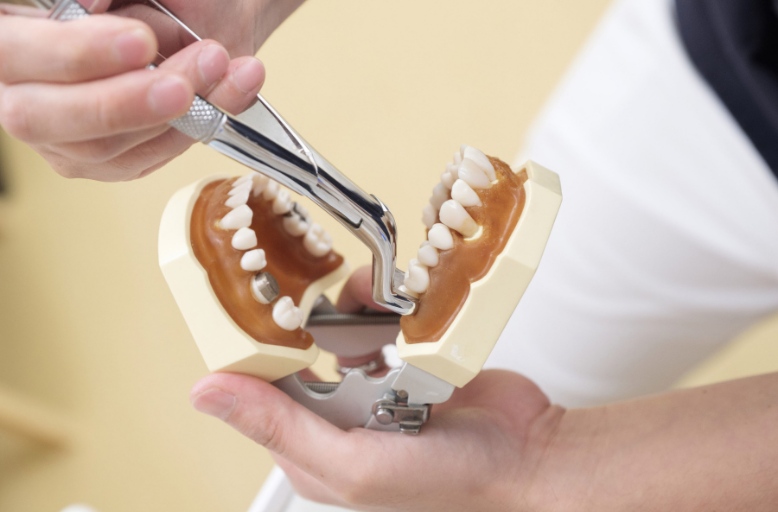
Are you experiencing pain in the back of your mouth and wondering if it’s just the normal growing pains of wisdom teeth or something more serious? Wisdom tooth pain can feel like a rite of passage for many, but when does that discomfort go from ordinary to alarming?
Understanding the difference between normal discomfort and a potential emergency can help you navigate the situation with confidence. In this post, we’ll break down the causes of wisdom tooth pain, how to identify whether it’s an emergency, and what to do about it.
The growing pains of wisdom teeth are common, but they shouldn’t be ignored if the pain becomes more intense or persistent. Whether you’re dealing with mild discomfort or a serious issue, knowing when to take action can make all the difference. Let’s explore how to determine whether your wisdom tooth pain is just discomfort or a sign of something more urgent.
What are Wisdom Teeth?
Wisdom teeth, also known as third molars, are the last set of teeth at the back of the mouth. These typically emerge in late teens or early twenties. For many, these final teeth don’t fit properly, causing them to become impacted, misaligned, or even infected. Wisdom teeth are often vestigial, meaning they’re remnants from a time when our ancestors had larger jaws and needed these additional teeth to chew tougher foods.
While some individuals have no issues with their wisdom teeth, others experience discomfort as the teeth emerge. This pain can range from mild to severe, depending on how the teeth are coming in.
In some cases, the wisdom teeth may be fully impacted, meaning they don’t break through the gums. In others, they may partially erupt, causing painful gum inflammation or infection. Understanding the causes of this discomfort can help determine whether it’s a normal part of the process or a sign of something more concerning.
Common Causes of Wisdom Tooth Pain
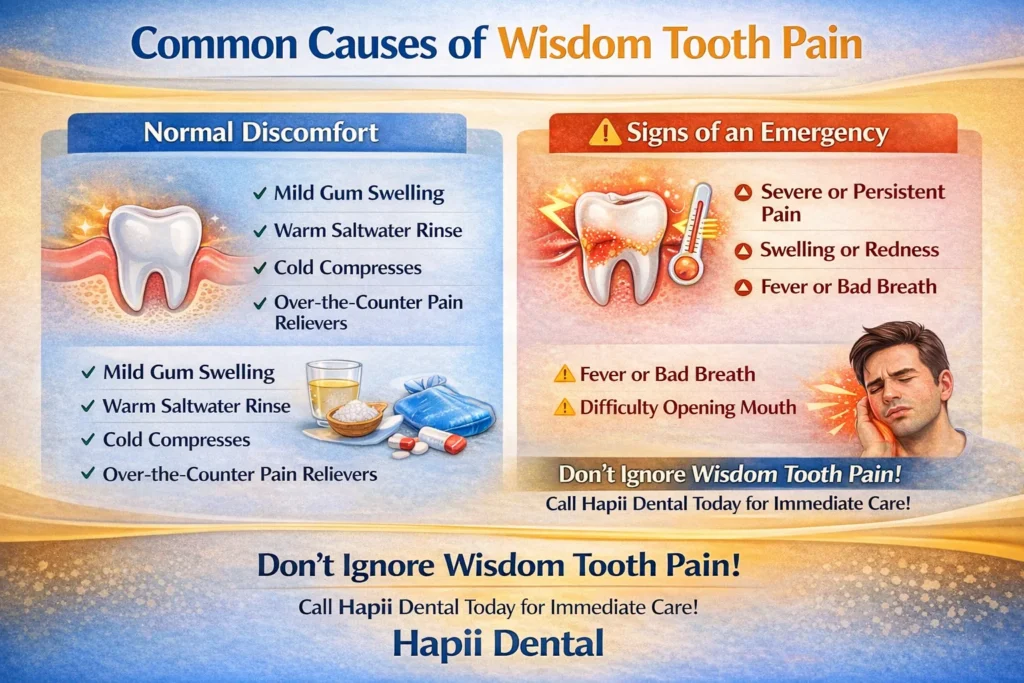
Normal Discomfort
Most people experience some level of discomfort when their wisdom teeth begin to emerge. This is a natural part of the process as the teeth push through the gums.
The common symptoms of this discomfort include mild gum swelling, tenderness, or a dull ache in the back of the mouth. This type of pain is usually temporary and can be managed with home remedies like warm saltwater rinses, cold compresses, and over-the-counter pain relievers.
Signs of an Emergency
While mild discomfort is expected, there are certain signs that suggest your pain may be more than just a normal symptom of emerging wisdom teeth. Red flags include:
- Severe pain: If the pain becomes intense or doesn’t go away after a few days, it might be a sign of infection or impaction.
- Swelling or redness: Significant swelling or redness around the wisdom tooth can indicate an infection.
- Fever or bad breath: These symptoms often point to an infection in the gum tissue or the tooth itself.
- Difficulty opening your mouth: If the pain is accompanied by an inability to open your mouth fully, it could indicate a more serious problem, such as an impacted tooth.
Recognizing these warning signs early is crucial to preventing further complications.
How to Tell If Your Wisdom Tooth Pain Is Normal
Mild Discomfort
It’s common for wisdom teeth to cause mild discomfort as they emerge. This pain can feel like a dull ache or pressure in the back of your mouth, usually near the gums where the wisdom teeth are coming through.
For most people, this type of pain is temporary and tends to come and go, especially as the teeth move through the gum line. You may also experience slight tenderness when touching the affected area or when chewing.
It’s important to note that if the pain is mild and intermittent, it’s likely just part of the natural process of your wisdom teeth coming in.
Pain Relief Tips
If you’re dealing with mild discomfort, there are a few simple remedies that can help alleviate the pain and make the process more manageable:
- Warm Saltwater Rinses: Gargling with warm saltwater can help reduce inflammation and promote healing. Salt has natural antibacterial properties, which can help cleanse the affected area.
- Over-the-Counter Pain Relievers: Nonsteroidal anti-inflammatory drugs (NSAIDs) like ibuprofen can reduce both pain and swelling. These are helpful if you’re experiencing tenderness or soreness.
- Cold Compresses: Applying a cold compress to the outside of your cheek can numb the area and reduce swelling, providing instant relief.
While these remedies can provide temporary relief, it’s important to monitor the pain. If it persists or worsens over time, it may be a sign that you need professional dental care to avoid complications.
When to Seek Emergency Care
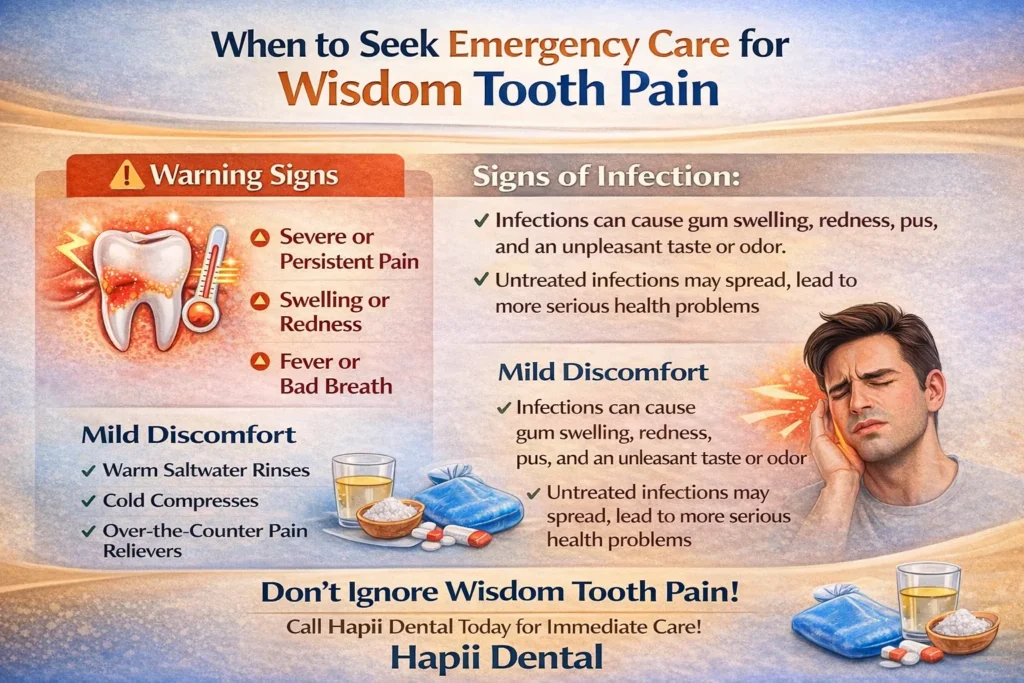
While mild discomfort is manageable, there are situations where seeking professional care is essential. If your pain becomes severe or persistent, it’s a sign that something more serious could be at play.
Additionally, if you notice swelling, fever, pus, or bad breath, these could be signs of an infection that requires immediate attention.
Signs of Infection
Wisdom teeth are prone to infections, especially if they are impacted or not fully erupted. Infections can cause the gum tissue to swell, become red, and release pus. These symptoms, coupled with fever, should never be ignored. An untreated infection can spread to other parts of the body, potentially leading to more severe health issues.
Complications
Complications such as impaction, where the wisdom tooth doesn’t emerge fully or properly, can lead to damage to surrounding teeth. Impacted teeth can also result in the formation of cysts, which can harm the jawbone and lead to more complicated dental issues. It’s best to get a professional evaluation to prevent these complications from worsening.
Emergency Treatment Options
Immediate Relief
If you’re experiencing severe pain, there are a few things you can do while waiting for a dentist’s appointment:
- Pain relievers: Over-the-counter pain relievers like acetaminophen or ibuprofen can provide temporary relief.
- Cold compresses: Apply ice to the affected area to reduce swelling and numb the pain.
Professional Care
When you visit a dental professional, they will assess the severity of the pain and may recommend an X-ray to determine if the wisdom tooth is impacted or if there’s an infection.
In some cases, antibiotics may be prescribed if there’s an infection. If the wisdom tooth is severely impacted or causing other issues, your dentist may recommend wisdom teeth extractions in Austin.
How to Prevent Wisdom Tooth Pain in the Future
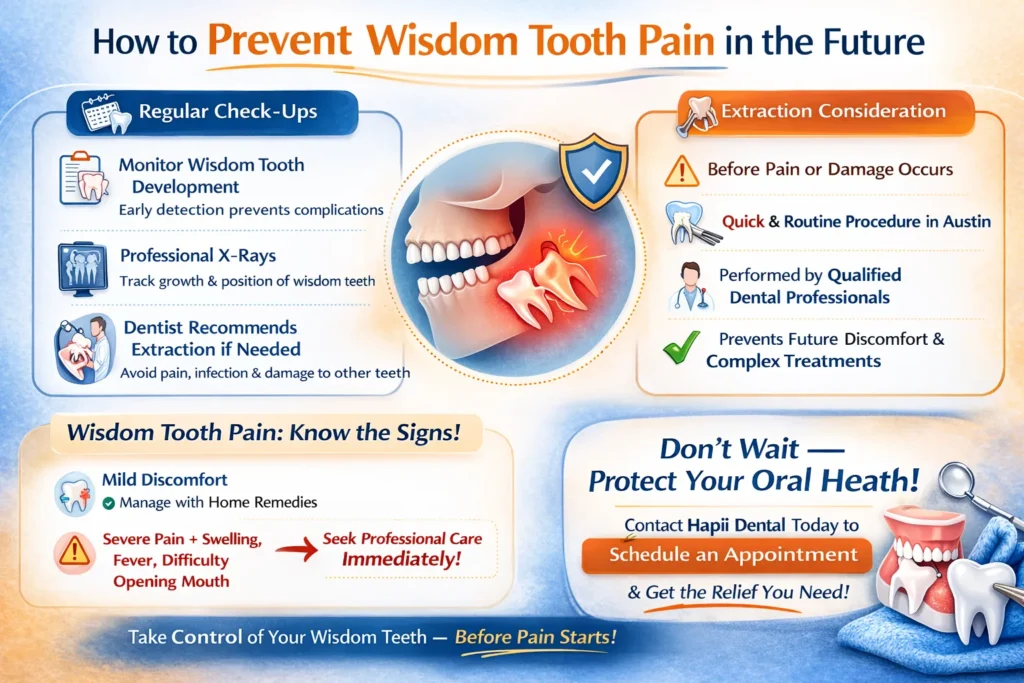
Regular Check-ups
The best way to prevent future wisdom tooth pain is by having regular dental check-ups. Dentists can monitor the development of your wisdom teeth and intervene if necessary, such as recommending extraction before serious issues arise. It’s especially important to have X-rays taken regularly to track the progress of your wisdom teeth.
Extraction Consideration
If your wisdom teeth are at risk of causing complications, extraction may be recommended before they start causing significant pain or damage to other teeth. Wisdom teeth extractions in Austin are a routine procedure performed by qualified dental professionals. Early removal can prevent future discomfort and the need for more complex treatments later on.
Wisdom tooth pain is common, but it’s essential to distinguish between normal discomfort and signs that something more serious may be occurring. If you experience mild discomfort, home remedies can often provide relief. However, if the pain becomes severe or is accompanied by swelling, fever, or difficulty opening your mouth, it’s time to seek professional care.
If you’re unsure whether your wisdom tooth pain requires emergency attention, don’t wait. Contact Hapii Dental today to schedule an appointment and get the relief you need!
Frequently Asked Questions
Is swelling around wisdom teeth normal?
Some swelling is normal as the teeth come in, but excessive swelling, especially with fever, may signal an infection and require dental attention.
Can wisdom teeth come in without causing pain?
Yes, some people have no discomfort when their wisdom teeth emerge, especially if they have enough space in their mouth for the teeth to come through.
Are there any foods I should avoid with wisdom tooth pain?
It’s best to avoid hard, crunchy, or sticky foods that can irritate the gums and worsen the pain. Soft foods like soups or yogurt are easier to eat.
Should I brush my wisdom teeth while they hurt?
Yes, maintaining good oral hygiene is important. Be gentle when brushing the affected area to avoid irritation.
Can wisdom teeth cause headaches?
Yes, if wisdom teeth are impacted or inflamed, they can put pressure on the surrounding areas, leading to headaches.