



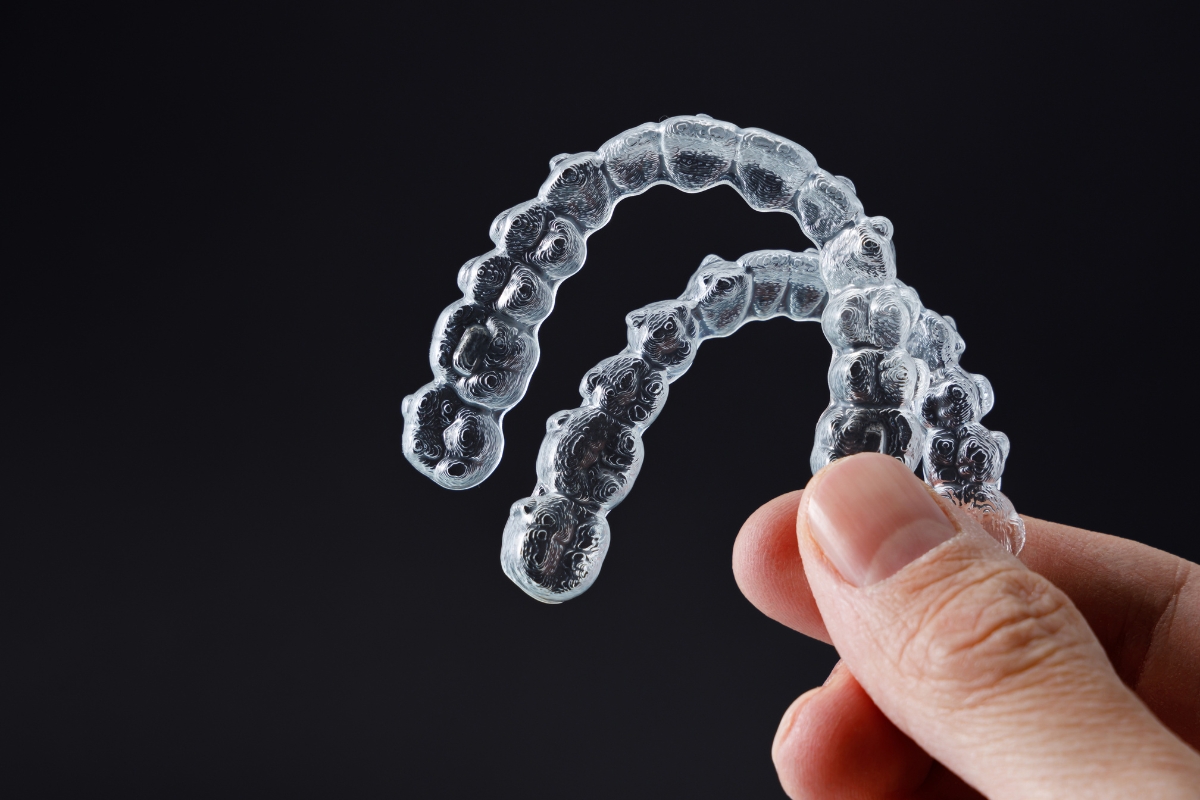
Are teeth crowding making you self-conscious about your smile? You might have thought about Invisalign, but probably wondered, “Can Invisalign fix my case?”. Crowding happens when your teeth do not have enough space to align properly, which makes your smile uneven. Invisalign is a revolutionary clear aligner system that has been highly recognized for straightening out crowding.
However, will it be the right solution for your situation? This blog discusses whether Invisalign is suitable for your case of crowded teeth or if more intensive treatments are required.
What is Dental Crowding?
Crowding occurs when there is not enough space in the jaw for teeth to align properly. Sometimes, this may cause teeth to partially cover or partially overlap others, or even take on awkward positions. Crowding may be due to genetics, the premature loss of baby teeth, or abnormal development of teeth.
If left unaddressed, crowding might result in inadequate cleaning of teeth and hence predispose one to various complications such as caries, periodontal disease, and eventually, tooth decay. It is thus important for effective treatment to prevent long-standing oral health problems.
How Invisalign Works for Crowding
Invisalign clear aligners work by gradually shifting your teeth into their correct positions through a series of custom-made aligners. These aligners apply gentle pressure that moves teeth over time. In cases with mild to moderate crowding, it is highly effective since it uses the flexibility of clear aligners in correcting misalignment while comfort and discretion are maintained.
Unlike traditional metal braces, Invisalign aligners are removable, allowing for easy cleaning and eating. The nearly invisible design makes them an appealing option for adults who want a discreet treatment.
When is Invisalign not Ideal for Severe Crowding?
In some instances, Invisalign might not be as ideal for the most extreme forms of crowding. More complex cases with severely rotated teeth, teeth that overlap too much, or those that require large shifts might be challenging to treat with Invisalign alone. Invisalign aligners may not move teeth far enough at one time to give a good result.
Severe cases may be better treated using traditional braces or even surgical options such as the realignment of the jaws. An adept Invisalign dentist in Austin will help determine whether clear aligners will be effective for your particular needs.
Factors That Affect Invisalign’s Success in Crowding Cases
Several factors influence the success of Invisalign in treating crowding. The main factor is the severity of the crowding. Mild to moderate crowding should be fairly effectively treated with Invisalign, whereas more extreme cases will require other methods of treatment. Another factor involves age. Tooth movement can be faster among adolescents because their teeth are still developing, while adults may take longer to adjust.
Overall dental health is critical. Invisalign is effective for patients with healthy gums and teeth only. Last but not least, patient compliance is a very important factor, which means that aligners should be worn as instructed to achieve the desired result.
Consulting with an Orthodontist: How to Know if Invisalign is Right for You
The most accurate assessment regarding clear aligners is obtained during a consultation with a qualified Invisalign dentist in Austin. During the consultation, the dentist will assess the dental crowding of the individual, review the medical history, and check the alignment of teeth.
A treatment plan will be determined regarding whether Invisalign will work based on your crowding condition. For cases of a higher complexity level, he or she may suggest options other than the use of orthodontics.
Invisalign is effective for mild to moderate dental crowding and presents a discreet, comfortable solution. Severe crowding may require treatment with traditional braces or surgery. Consult our dental office to decide which route is best for you.