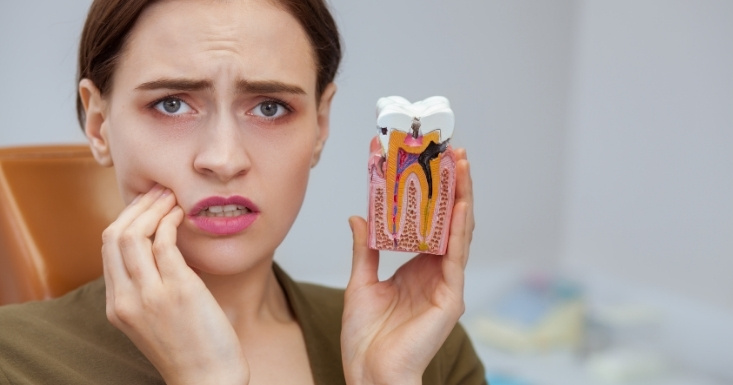


An unexpected toothache during the workday, a broken tooth while dining, or overnight swelling can easily escalate into a stressful scenario. When pain becomes extreme or an injury involves your teeth or gums, waiting could worsen the problem.
If you are currently experiencing intense tooth pain, swelling, bleeding, or dental trauma, contact our emergency dentist immediately. Immediate attention may keep an infection at bay, safeguard your teeth, and minimize complications.
For those unsure whether their symptoms require urgent care, knowing the warning signs can help you act quickly and confidently.
In this blog, you’ll discover the most frequent indicators of emergency dental care and what you should do before reaching the clinic.
Common Symptoms of a Dental Emergency
A tooth emergency typically signifies pain, infection, or damage that demands immediate care. According to the American Dental Association (ADA), early treatment helps prevent complications and protects surrounding teeth and tissues.
Here are the most common warning signs that require immediate attention.
1. Severe or Persistent Tooth Pain
Never ignore tooth pain that does not subside within a day or two.
Pain may signal:
- Deep tooth decay
- Infection inside the tooth
- Cracked enamel
- Advanced gum disease
If the pain becomes severe or pulsating, it might need immediate assessment.
If the pain becomes sharp, constant, or radiates toward the jaw or ear, it may be time to visit an emergency dentist in Austin, TX, for evaluation.
2. Puffiness in and Around the Gums or Face
Facial swelling is another of the most obvious signs of infection.
Common causes include:
- Dental abscess
- Severe gum infection
- Impacted tooth
- Untreated decay
Swelling around the gums, cheeks, or jawline may be present. Sometimes it can even be hard to open your mouth or swallow.
3. Broken, Cracked, or Knocked-Out Tooth
Dental trauma can happen unexpectedly.
Common causes include:
- Sports injuries
- Slipping during outdoor activities
- Accidental falls
- Biting into hard foods
Austinites who love biking the trails, kayaking Lady Bird Lake, or working out in the great outdoors might find themselves with the occasional dental injury.
Signs that need emergency care include:
- Visible cracks
- Severe tooth sensitivity
- Bleeding around the tooth
- A completely knocked-out tooth
Immediate care can potentially help save the tooth — even if it’s possible to repair or reattach it.
4. Bleeding That Does Not Stop
Occasional gum bleeding during brushing may occur, but continuous bleeding is not normal.
Possible causes include:
- Gum infection
- Injury to oral tissues
- Advanced periodontal disease
- Complications after dental procedures
If bleeding persists for more than several minutes, professional assessment is crucial.
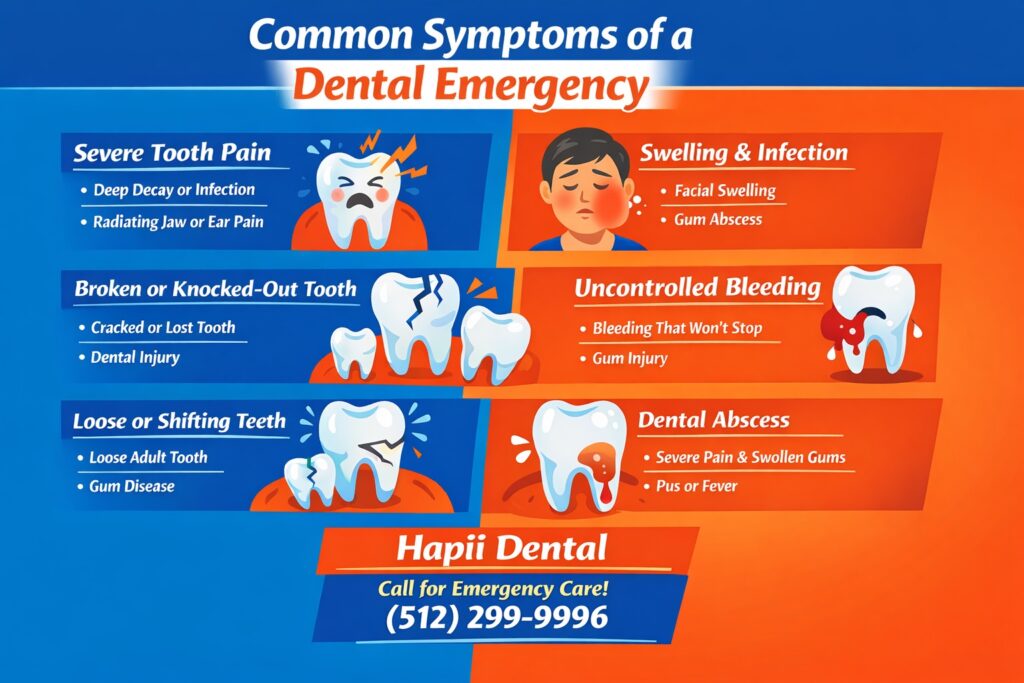
5. Loose or Shifting Teeth
Adult teeth should be solid in the jaw.
A tooth that suddenly loosens might signal:
- Gum disease
- Bone loss
- Dental trauma
- Infection
Prompt intervention can also help stabilize the tooth and prevent future damage.
6. Signs of a Dental Abscess
A dental abscess is an infection near the root of a tooth.
Symptoms may include:
- Severe pain
- Swelling in the gums
- Pus discharge
- Fever
- Bad taste in the mouth
Untreated abscesses can spread infection, which is why immediate care is necessary.
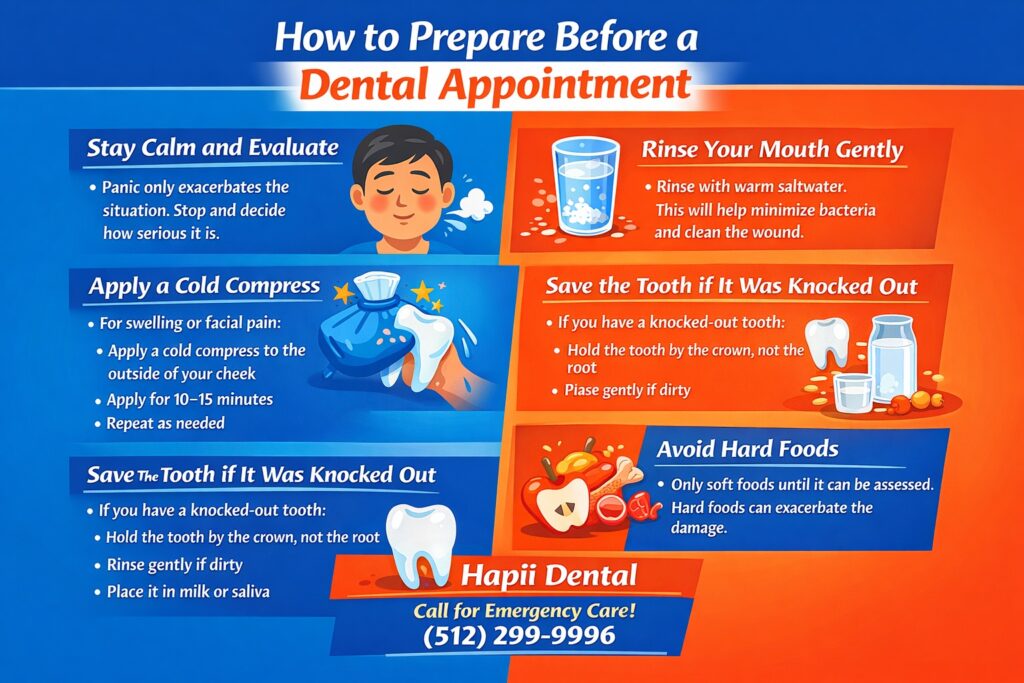
How to Prepare Before a Dental Appointment
If you think you’re having a dental emergency, what you do before you get to the emergency dentist in Austin, TX can help preserve your smile.
Stay Calm and Evaluate
Panic only exacerbates the situation. Stop and decide how sick it is.
Rinse Your Mouth Gently
Rinse with warm saltwater. This will help minimize bacteria and clean the wound.
Apply a Cold Compress
For swelling or facial pain:
- Apply a cold compress to the outside of your cheek
- Apply for 10–15 minutes
- Repeat as needed
Cold compresses can help with inflammation.
Save the Tooth if It Was Knocked Out
If you have a knocked-out tooth:
- Hold the tooth by the crown, not the root
- Rinse gently if dirty
- Place it in milk or saliva
- Seek care quickly
Act fast, and you’ll have a better chance of saving the tooth.
Avoid Hard Foods
Only soft foods until it can be assessed. Hard foods can exacerbate the damage.
When Immediate Care Matters Most
Certain symptoms require urgent attention.
Pursue urgent care if you have:
- Severe swelling in the face or jaw
- Difficulty swallowing or breathing
- Intense, persistent pain
- A knocked-out tooth
- Signs of infection such as fever
Early treatment reduces complications and improves recovery outcomes.
Early action protects your oral health.
A dental emergency can occur at any time, even during normal daily activities.
Identifying the symptoms sooner helps prevent issues and protects nearby teeth and gums. Pain, swelling, bleeding, or trauma should never be dismissed.
Knowing these symptoms can help you respond promptly and intentionally to your oral health.
If you are experiencing sudden tooth pain, swelling, or dental trauma, our team at Hapii Dental provides prompt care for urgent dental concerns. In our dental office, our emergency dentist in Austin, TX, emphasizes transparent communication, convenient treatment, and getting patients out of dental pain fast and safely.
Common Questions People Ask
What constitutes a dental emergency?
A dental emergency encompasses intense toothache, facial swelling, uncontrollable bleeding, avulsed teeth, or signs of infection. These symptoms are signs of conditions that require immediate attention to prevent complications and safeguard neighboring teeth and tissues.
Should I go to urgent care or a dentist for tooth pain?
Tooth pain generally needs a dentist, not an urgent care. Dentists can identify infections, fractures, or gum disease and treat the root cause.
How soon should a knocked-out tooth be handled?
A knocked-out tooth needs to be seen immediately. Most dentists will advise looking for treatment within 30 – 60 minutes, as acting fast increases the likelihood of saving the tooth.
Is infection indicated by swollen gums?
Yes. Swelling can be a symptom of a dental abscess or a gum infection. Untreated infections can spread, so swelling needs to be seen by a dentist immediately.