




A toothache that won’t go away. Swelling that crept up overnight. A fever you can’t shake. These aren’t things to sleep on, and yet, many people do. A dental infection may start in one tooth, but left alone, it doesn’t stay there. Understanding what your body is telling you early on can be the difference between a straightforward fix and a genuine medical emergency.
What Causes a Dental Infection?
Most dental infections begin when bacteria reach the inner chamber of a tooth (the pulp) through a cavity, a crack, or damaged enamel. Once bacteria settle in, the infected dental pulp can’t heal on its own. The infection grows, and without treatment, it forms a pocket of pus called an abscess.
Dental infection symptoms don’t always announce themselves loudly at first. Some people notice mild tooth sensitivity and infection before things escalate. Others wake up one morning with a throbbing toothache and a visibly swollen jaw. Either way, the underlying cause is bacterial, and bacteria don’t stop spreading on their own.
Common Signs of a Tooth Infection
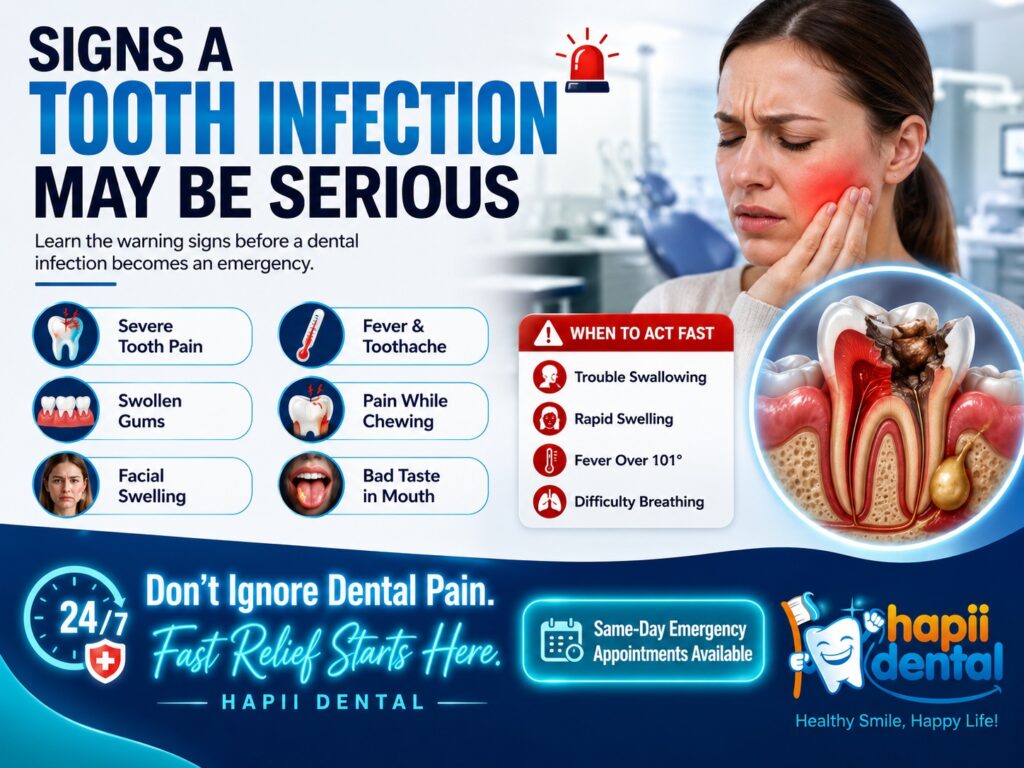
Recognizing early infected tooth signs gives you options. The sooner you act, the simpler the treatment tends to be. Here’s what typically shows up:
- Throbbing tooth pain that’s persistent or worsens when you lie down
- Tooth sensitivity to hot, cold, or pressure while chewing
- Swollen gums or a raised, tender bump near the tooth
- Pus near the tooth, or a bad taste in your mouth that keeps returning
- Facial swelling, particularly around the jaw or cheek
- Fever or general fatigue, which can signal that the infection is affecting more than just the tooth
Not every infection looks the same. Some dental abscess symptoms appear overblown; others feel like a nagging ache that just won’t resolve. What matters is that you don’t dismiss them.
When a Dental Infection Becomes an Emergency
Most dental infections are manageable when caught early. But there’s a point where they tip into emergency territory, and that threshold is important to know.
You’re looking at a dental infection emergency if you experience any of the following:
- Swelling that’s spreading to your jaw, neck, or floor of the mouth
- Difficulty swallowing or breathing
- Fever above 101°F, especially combined with facial swelling
- Swollen face from a tooth infection that appeared rapidly
- Feeling unwell beyond just mouth pain – headache, confusion, or extreme fatigue
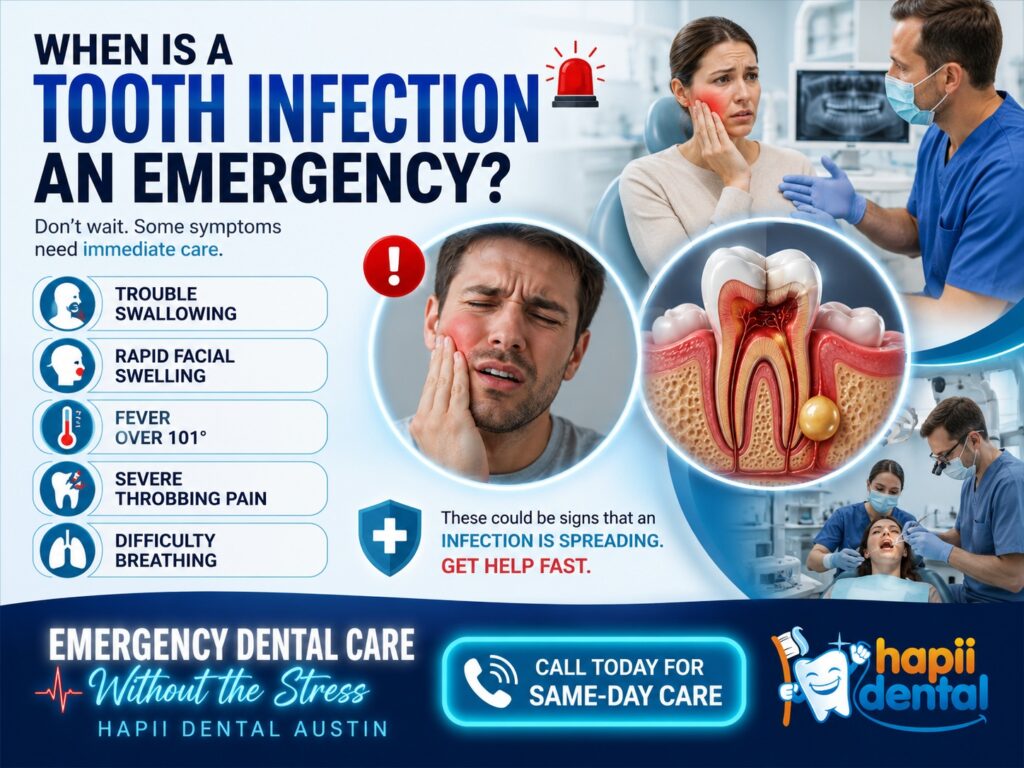
These are not symptoms you wait out. If you’re experiencing any of these, contact an emergency dentist in Austin right away or go to the nearest ER.
Can a Tooth Infection Spread to Other Parts of the Body?
Yes, and this is where people tend to underestimate the severity of dental infections. According to the American Dental Association, an untreated tooth infection can spread to the jaw, neck, and even the brain or heart in serious cases. Conditions like Ludwig’s angina (a deep-space neck infection) and dental sepsis, though relatively rare, are both connected to untreated oral infection.
The bacteria responsible for dental abscessed tooth symptoms can travel through the bloodstream. This is why people with certain heart conditions are especially cautioned about unmanaged dental infections – the link between oral bacteria and cardiovascular health is well documented in both dental and medical literature.
Dental infection spreading is not a dramatic edge case. It’s a real, documented risk that’s entirely preventable with timely treatment.
Symptoms You Should Never Ignore
Some of the dental infection symptoms listed above bear repeating because people consistently wait too long for them:
- Jaw swelling and tooth pain together — this often means the infection has moved beyond the tooth itself
- Pain when chewing, combined with visible gum swelling
- A persistent bad taste in the mouth (tooth infection-related drainage)
- Tooth infection swelling that changes noticeably from morning to evening
- Any fever with mouth pain — your immune system is signaling that this has become a systemic concern
If you’re unsure whether what you’re feeling qualifies as urgent, it’s always better to call and ask than to wait and hope it resolves.
How Dentists Treat Dental Infections
Tooth infection treatment in Austin depends on how far the infection has progressed. The goal is always to eliminate the source of bacteria and preserve the tooth whenever possible.

Common approaches include:
- Root canal therapy — the infected dental pulp is removed, the canal is cleaned and sealed, and the tooth is saved
- Antibiotics — used to control bacterial spread, but not as a standalone cure (more on this below)
- Dental drainage — for an abscess, a same-day dentist in Austin may need to drain the pocket of pus to relieve pressure and begin healing
- Emergency tooth extraction — when the tooth is too damaged to save, removal eliminates the source of infection entirely
- Follow-up oral infection treatment — to ensure the infection is fully resolved and doesn’t recur
At Hapii Dental in Austin, the team handles dental emergencies with the same calm, patient-focused approach they bring to every appointment. Same-day emergency oral care appointments are available for situations that can’t wait.
What Happens If a Tooth Infection Goes Untreated?
An untreated tooth infection doesn’t simply plateau. It progresses — sometimes slowly, sometimes fast. The abscess can rupture, providing temporary (and deceptive) pain relief while the bacteria continue spreading to surrounding bone and tissue.
Over time, an untreated infection can lead to:
- Bone loss around the infected tooth
- Spreading cellulitis or facial swelling
- Hospitalization in serious cases of bacterial spread
- Tooth loss, even if the tooth seemed savable earlier
The longer the treatment is delayed, the more invasive and potentially costly the intervention becomes.
Can Antibiotics Cure a Dental Infection?
This is one of the most common misconceptions in dental care. Antibiotics can reduce bacteria responsible for bacterial tooth infection, but they cannot eliminate the source. The infected tissue or abscess itself still needs to be physically treated by a dentist.
Taking a course of antibiotics and feeling better does not mean the infection is gone. It often means it’s temporarily suppressed. Without addressing the actual tooth, the infection will return — sometimes more aggressively.
When to Visit a Same-Day Emergency Dentist
If you’re dealing with severe tooth pain, jaw swelling, a fever alongside mouth symptoms, or a visible abscess, don’t wait for a regular appointment. Austin emergency dental care exists precisely for these situations.
Hapii Dental, located in Austin, offers same-day emergency dental appointments and is equipped to treat urgent tooth infections. Whether you need a root canal, drainage, or an emergency tooth extraction, the team is ready to help with a calm, no-judgment approach that’s especially important when you’re already in pain.
How to Prevent Future Dental Infections
Most dental infections are preventable. The groundwork is straightforward:
- Brush twice daily and floss every day — this removes the bacterial plaque that causes cavities and gum disease
- Don’t delay fillings — a small cavity treated early never becomes an abscess
- Get regular checkups — routine exams catch problems before they become infections
- Protect damaged teeth — cracks and old, worn fillings are entry points for bacteria
- Address gum disease promptly — periodontal disease creates pockets where bacteria thrive near tooth roots
Prevention is far easier on your schedule, your health, and your wallet than urgent dental treatment in Austin. That said, if an infection does develop, early treatment is always better than waiting.
The team at Hapii Dental in Austin is here to help – same-day appointments are available. Book online today.
People Also Ask
Can a tooth infection become serious?
Yes. Left untreated, a tooth infection can spread to the jaw, neck, or bloodstream, leading to life-threatening complications like sepsis or Ludwig’s angina in rare but documented cases.
What happens if a tooth infection goes untreated?
The infection spreads to the surrounding bone and soft tissue, causing increasing pain, swelling, and potential systemic illness. Tooth loss and hospitalization become more likely the longer it goes unaddressed.
Is swelling from a tooth infection dangerous?
It can be. Rapid facial or neck swelling, especially with difficulty breathing or swallowing, is a medical emergency requiring immediate care.
Should I go to the ER for a tooth infection?
Go to the ER if you have difficulty breathing or swallowing, a spreading swelling in your neck, or a high fever. Otherwise, an emergency dentist in Austin can treat most infections more quickly and precisely than an ER can.
Can a tooth infection spread?
Yes. A tooth infection can spread to the jaw, neck, surrounding bone, and bloodstream if left untreated, making timely dental treatment essential.
How do dentists treat tooth infections?
Treatment typically involves a root canal, abscess drainage, antibiotics to control spread, or extraction if the tooth is too damaged to save.
What are the signs of a dental abscess?
Common signs include persistent throbbing pain, swollen gums, pus near the tooth, a bad taste in your mouth, and facial swelling.